Guide
Power
Start with a phone and a light. Both should charge from the same small bank. Generators and car batteries are further down the page, on purpose.
101 · a phone and a light
One job at this rung: keep a phone charged, and have a light that does not depend on the wall. Charge both before you need them. A dead bank and a dead light are two bricks.
The bank below has a USB-C port and a USB-A port. The lights charge with a micro-USB cable, which is the older flat plug, into that USB-A port. The cable comes with the light. Put it in the bag with the light. These lights are not USB-C.
Power banks, for phones:
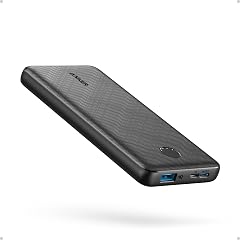 Anker PowerCore Slim 10000, one bankAbout 10,000 mAh, enough for roughly two phone charges. USB-C in and out, plus a USB-A port, and a USB-C cable in the box. Sold as a single.
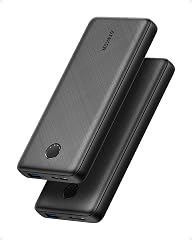 Anker PowerCore Slim 10000, two-packThe same bank, sold as a pair, if two phones have to stay charged. Do not buy the pair if you only need one.
As an Amazon Associate, Getting Prepared Now earns from qualifying purchases. These are ordinary basics, not a required shopping list. Listings change. Check the name, that you are buying one unless it says otherwise, and that it is in stock.
LED lights that recharge from those banks:
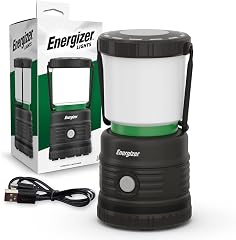 Energizer X1000 rechargeable LED lanternA hanging lantern that recharges from the power bank. It uses the micro-USB cable in the box, plugged into the bank’s USB-A port. It is not USB-C. Keep that cable with the light.
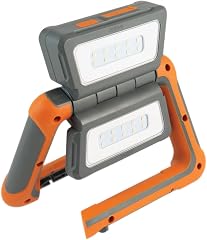 Energizer rechargeable LED panel lightA folding work light, also charged with its own micro-USB cable from the same kind of power bank. Useful on a counter or hung from the handle. Again, not USB-C.
As an Amazon Associate, Getting Prepared Now earns from qualifying purchases. These are ordinary basics, not a required shopping list. Listings change. Check the name, that you are buying one unless it says otherwise, and that it is in stock.
Use the dim setting when you can. A lantern on high for hours will want another charge from the bank, and then the phone has less.
201 · small power for 72 hours
The bank and the light from the top of this page are still the plan. Seventy-two hours adds a list, not a generator.
- What must have electricity: the phones, the light, medicine that has to stay cool, and any medical device that plugs in. The television does not.
- A car can charge a phone from the 12-volt socket, engine running, outdoors. Do not idle in a garage. Carbon monoxide is the same poison a generator makes. The full rule is in the next section.
- A radio that does not need the internet still matters when the phone has a charge and no signal. That part of the 72 hours is on 201.
- Recharge the bank when the power comes back for an hour. Do not wait until it is empty and the lights are out again.
301 · house power, small power, and batteries
A month while crews are working is power that comes and goes. Keep the phone and the light on the bank from the top of this page. Do not invent a wiring project because the outage has lasted.
AC is the house
Alternating current is what the wall outlets already speak. Fridge, well pump, window air conditioner. Making those work without the utility is a generator or a large inverter. Both can be installed wrong.
If a generator is part of the plan, carbon monoxide is the first fact. CDC: never run a generator inside the home or the garage, even with the doors and windows open. Use it outside, more than 20 feet from windows, doors, and vents. Have a battery-powered carbon monoxide alarm, because you cannot see or smell the gas.
- Do not backfeed the house by plugging a generator into a dryer outlet. That can energize lines outside and hurt the people repairing them. A transfer switch or interlock, installed by someone who does that work, is the safe way to feed a panel.
- Do not heat with a gas oven. Ready.gov warns that this raises the risk of carbon monoxide, fire, and burns.
- Decide which loads earn the fuel. Air conditioning in a Florida month can matter for health. A second refrigerator full of drinks does not.
DC stays the phone and the light
Direct current will not run the air conditioner. It will keep the phone and the LED light alive, which is what the 101 section already set up. USB is 5 volts. Use the cable that came with the device. Do not splice a USB charger onto a battery with speaker wire.
Do not idle a car in a garage to charge phones. Outdoors, away from the house, or not at all.
Batteries are not interchangeable
A battery is not a bucket of generic electricity. The chemistry decides the charger. This is the short version, not a wiring class.
| Lead-acid | Lithium | |
|---|---|---|
| What people mean | Car starting batteries, and deep-cycle batteries made to be drained and recharged. | The power bank above, phone packs, and LiFePO4 house batteries. Those lithium types are not the same as each other. |
| What it is for | A car battery is a short burst to start an engine. Using it as the house battery all night can leave you unable to leave. A deep-cycle battery is the one built for a slow drain. | The power bank is for phones and for charging the USB lights. It is not a house battery. |
| Charging | Use a lead-acid charger. Charging gives off hydrogen. Do it where air moves. No sparks, no closed trunk. | Use the charger made for that pack. A lead-acid charger can overcharge a lithium pack. The phone bank charges from a normal USB charger. |
| A clue people miss | A “12-volt” lead-acid battery and a “12-volt” LiFePO4 battery are close enough in voltage to fool you. Close is not compatible. | |
Safe to connect means same chemistry, same voltage, similar age and size, polarity you have checked, and a fuse. Not safe: lead-acid posts tied to a lithium pack, a swollen or hot pack, or jumper cables from a car onto a power bank because “it’s all 12 volts.” A meter shows voltage, which is a clue, not a health report.